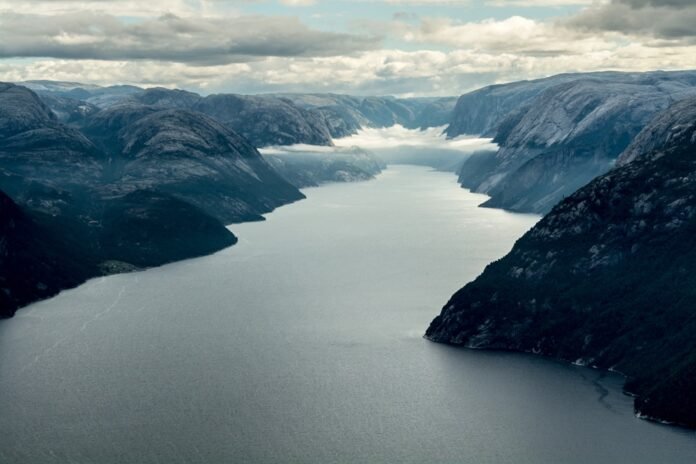
Lysefjorden is one of many Norwegian landscapes carved by repeated glaciations during the Quaternary Period. The same processes have also shaped the Norwegian Continental Shelf. Photo: Carl Cerstrand
The last 2.6 million years of Earth’s history, known as the Quaternary period, have been shaped by the repeated advance and retreat of vast ice sheets and dramatic fluctuations in sea level. These powerful natural processes have profoundly influenced sedimentation patterns and depositional environments, particularly along glaciated continental margins such as the Norwegian Continental Shelf (NCS).
To explore the geological, geohazard, and resource implications of these processes, leading experts from industry, academia, and research institutes will gather at Campus Ullevål, Oslo, on 23-24 September 2026 for a two-day workshop dedicated to the Quaternary of the Norwegian Continental Shelf.
The programme features keynote lectures, industry case studies, sample demonstrations, a guided laboratory tour, and dedicated networking opportunities. Participants will gain insights into the latest developments in Quaternary geology, geophysics, geotechnics, and offshore exploration.
Why the Quaternary Matters
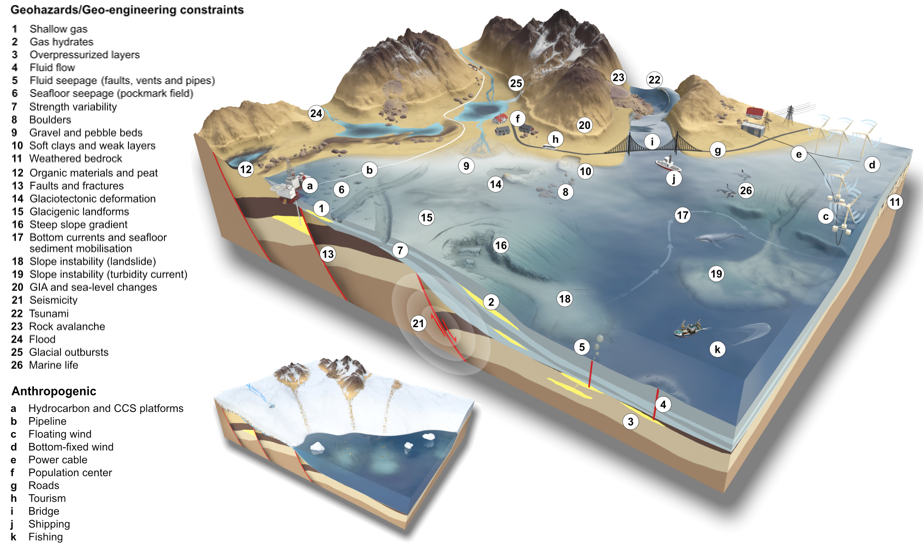
The legacy of Quaternary glaciations continues to influence modern offshore activities across the NCS. The uppermost 100 metres of the subsurface, predominantly composed of Quaternary sediments, hosts a wide range of geotechnical challenges and geohazards relevant to the design and installation of offshore infrastructure. Features such as shallow gas accumulations, large boulders, and sediments with highly-variable properties demand increasingly sophisticated site investigation approaches.
Beyond geohazards and geo-engineering constraints, Quaternary deposits also present intriguing exploration opportunities. Across the North Sea Basin, the outer shelf regions, and continental slopes in particular, these sedimentary successions can reach many hundred metres in thickness. The discovery of gas within the Quaternary Peon reservoir in the Northern North Sea demonstrated that these deposits can form viable hydrocarbon reservoirs. While exploration within Quaternary sequences remains unconventional, emerging play concepts involving outwash fans, contourites, and turbidite systems continue to attract growing interest.
Day 1: Glacial Processes, Reservoir Potential, and Industry Perspectives
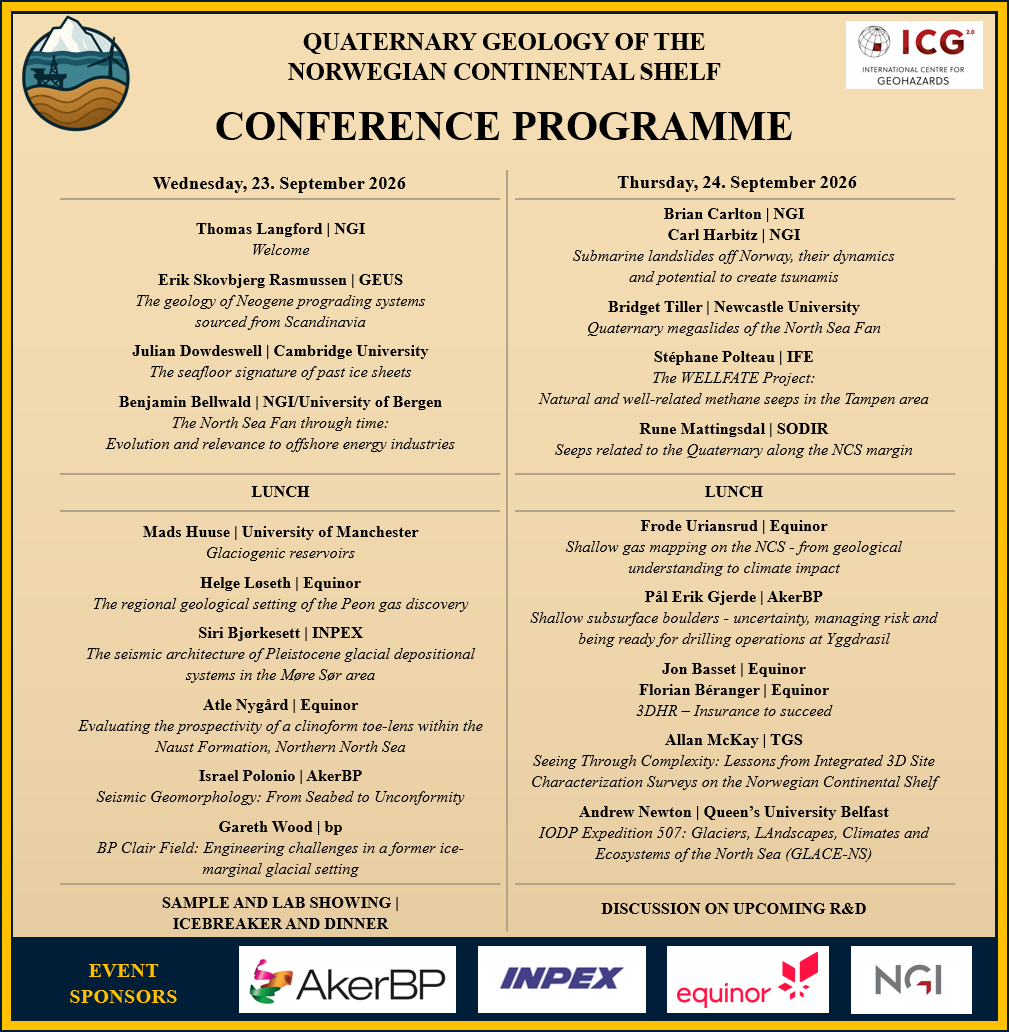
The first day opens with keynote presentations covering Quaternary geology, glacial landforms, glaciogenic reservoirs, and exploration concepts from the Northern North Sea and the North Sea Fan. Experts from leading energy companies will share their experiences and current work related to Quaternary exploration and characterization.
Participants will also have the opportunity to examine samples from offshore projects conducted on glaciated margins and gain valuable insights into sedimentological and geological variability. The day concludes with a guided tour of NGI’s state-of-the-art laboratory facilities, followed by an icebreaker event and workshop dinner designed to encourage discussion, collaboration, and professional networking.
Day 2: Geohazards and Advanced Subsurface Imaging
The Norwegian continental margin contains some of the world’s most extensive and best-studied submarine landslide complexes. Among them, the Storegga Slide stands as one of the largest known offshore mass movement events, mobilizing at least 3,000 km³ of sediment around 8,200 years ago and generating a tsunami with documented impacts as far away as the United Kingdom and Denmark.
Another key topic is fluid migration within Quaternary sediments. Pockmarks and seep-related landforms observed throughout the North Sea, Mid-Norwegian Margin, and Barents Sea provide important evidence of past and present fluid flow, while the sediments themselves play an important role in controlling migration pathways and preserving the geological record of seepage.
Day 2 will focus on fluid seepage, slope stability, submarine landslides, and tsunami-generating processes, before turning attention to shallow gas accumulations, subsurface boulders, and the high-resolution geophysical datasets required to image and understand the complex architecture of Quaternary deposits. Presentations from exploration and offshore infrastructure specialists will highlight the growing importance of Quaternary studies in both resource development and risk management.
Join the Discussion
Bringing together specialists from across the geoscience community, this workshop offers a unique forum to discuss the latest research, technological advances, and practical challenges associated with Quaternary deposits on the Norwegian Continental Shelf. Whether your focus is offshore infrastructure, geohazards, geological storage, or hydrocarbon exploration, the workshop provides an excellent opportunity to exchange knowledge, discover new perspectives, and build valuable professional connections.
Registration
Don’t miss this opportunity to engage with leading experts and industry professionals. Register using the link below:
https://event.checkin.no/226151/quaternary-geology-of-the-norwegian-continental-shelf