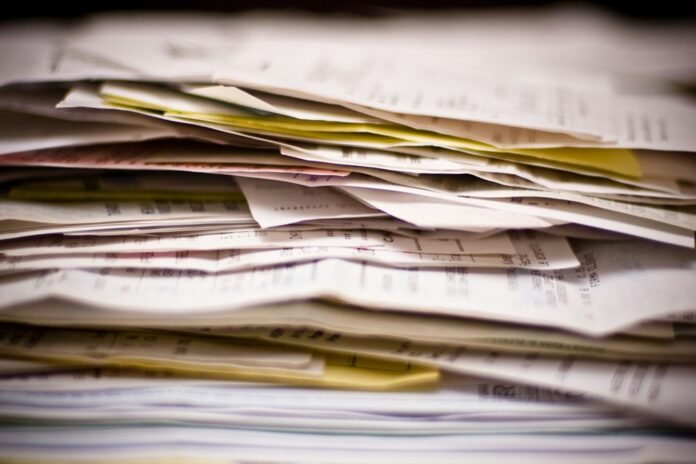
Photo by Camilo Rueda Lopez on Unsplash
Some of the most valuable well information never reaches a subsurface data platform. Instead, it remains buried in daily drilling and operations reports, recorded as free text and often difficult to search, compare or analyse.
At the Dig X Subsurface 2026 conference in Lillestrøm in December, Saradh Tiwari, D&I Data Scientist at SLB, together with collaborators from Equinor and SLB, will present a workflow that uses generative AI to convert unstructured well reports into standardized operational records.
The project focuses on daily operational remarks written during well operations. These reports often contain important information, but they may also include inconsistent terminology, missing dates, incorrect activity codes and other issues that make the information difficult to reuse in digital workflows.
To address this challenge, the team developed AI-powered workflows that reconstruct daily operations from scattered remarks and connect each activity to the correct category in a controlled industry vocabulary.
The resulting information is then converted into structured records compatible with Open Subsurface Data Universe (OSDU), an open, cloud-native industry standard designed to make subsurface data easier to find, share and use across applications and disciplines.
According to the authors, trust was the central challenge. The goal was not only to generate records automatically, but to ensure that the information was accurate, traceable and compliant with the standards and reference data used by the company.
The presentation will also discuss situations where the AI produced incorrect information and how validation and quality-control measures were used to detect and correct these errors before the records were accepted. One example highlights how fabricated reference values can appear convincing unless robust controls are in place.
Once the input data have been prepared, the system can generate standardized reports in one to two minutes. According to the authors, the same task could otherwise require hours of manual work reconstructing daily well activities.
The result is a workflow that helps convert operational knowledge trapped in free-text reports into searchable and governed data. This can improve reporting quality, support analytics and make valuable well information more accessible for future use.
Join us in Lillestrøm on December 2-3 to learn how Equinor and SLB are combining AI, data governance and OSDU to unlock value from unstructured well reports. The program can be found on the conference website.